
The United Kingdom is home to some of the most prestigious universities and colleges in the world. If you intend to become an international student in the UK, it’s essential to plan for your tuition, housing, and everyday expenses. In fact, proving you can cover those costs is part of applying for your student visa. Below, we’ll take a closer look at the current cost of living in the United Kingdom to help you build your budget.
Your cost of living will vary depending on which part of the UK you’re studying in. Generally, living in London is more expensive than in other parts of the country. While these numbers are current as of November 2025, it’s a good idea to check a cost of living calculator before setting your final budget because the cost of living changes regularly.
Preparing to become an international student? Our UK Student Guide can help you get ready.

Housing and Living Expenses
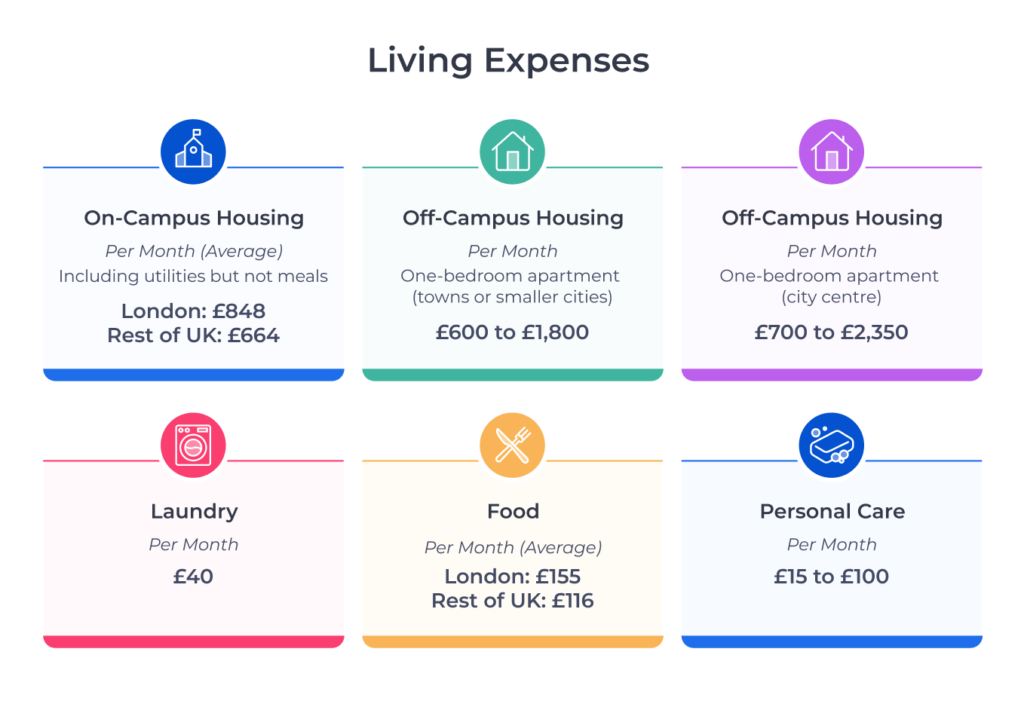
When researching where you’ll live, it’s important to know what each housing option offers. Does your student residence include meals? If so, it might seem more expensive at first, but may save you money and time because you won’t have to shop for groceries. Or, if your off-campus rent doesn’t include utilities, remember to budget for higher heating bills in the winter and higher water bills in the summer. Understanding the cost of living in the United Kingdom will take some time, but doing so before you arrive can help you ensure you can focus more fully on your studies.
To help you understand the average cost of living expenses in the UK, we’ve shared some essentials below:1
Many international students work part-time to cover their expenses. Could one of these part-time jobs for students in the UK be a good fit for you?
Utilities
“Utilities” refers to the supply of gas (or other heating fuel), water, and electricity to your home. You’ll usually be billed once a month or once every three months, and the amount will depend on how much of each utility you used. In the UK, rent often includes some or all of these utilities, but this isn’t always the case.
Your phone, TV, and internet plans are also utilities, but these are almost always paid separately from your rent. Consider using comparison sites to check for promotions on different plans: research can help you save money!
Below are some average utility prices in the UK:2
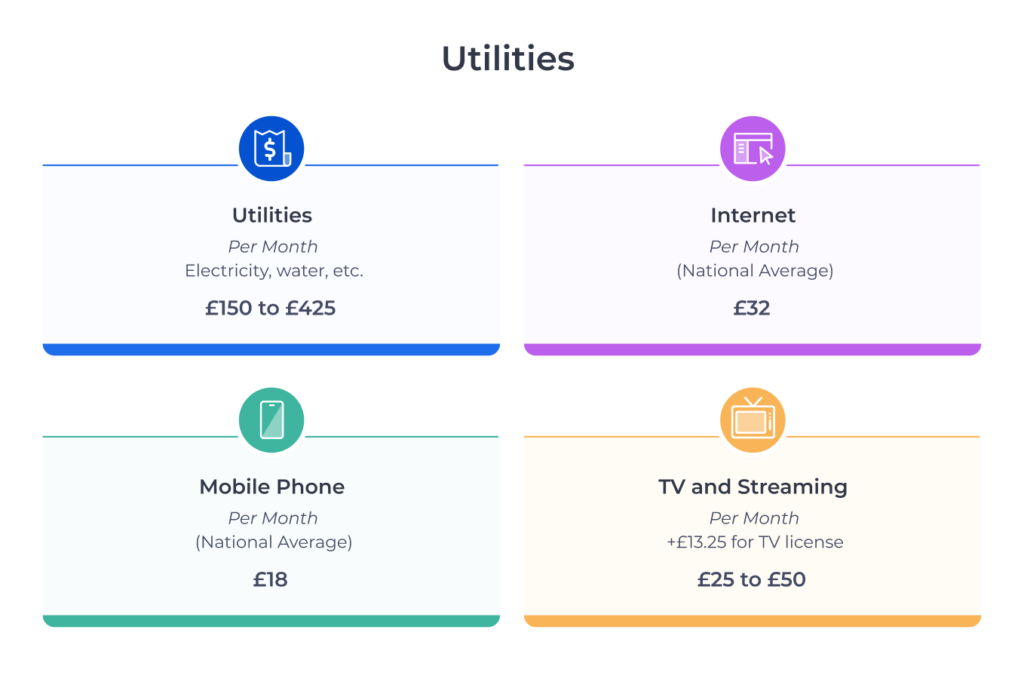
Utility costs may vary depending on:
- Local climate
- Provider options
- Your lifestyle
- The regulations in your city and region
- Location
- Whether you need a TV licence for your cable or streaming subscriptions
- If you bundle bills (like internet, TV, and phone) for a better deal
If you’re buying a new phone in the UK, paying it off quickly or buying it right away can lower your monthly payments. If you’re bringing a phone to the UK, you’ll need to buy a SIM card and sign up for a UK phone plan once you land. So, do your research beforehand to find a carrier and plan you like with a price that makes sense for your budget. Watch for special deals for students at the start of the course term, too.
If you’re living with other people, it’s important to agree on who pays which utility bills, when, and how much. An even split is the most common approach.
Here are four tips to maximize your student budget.
Leisure
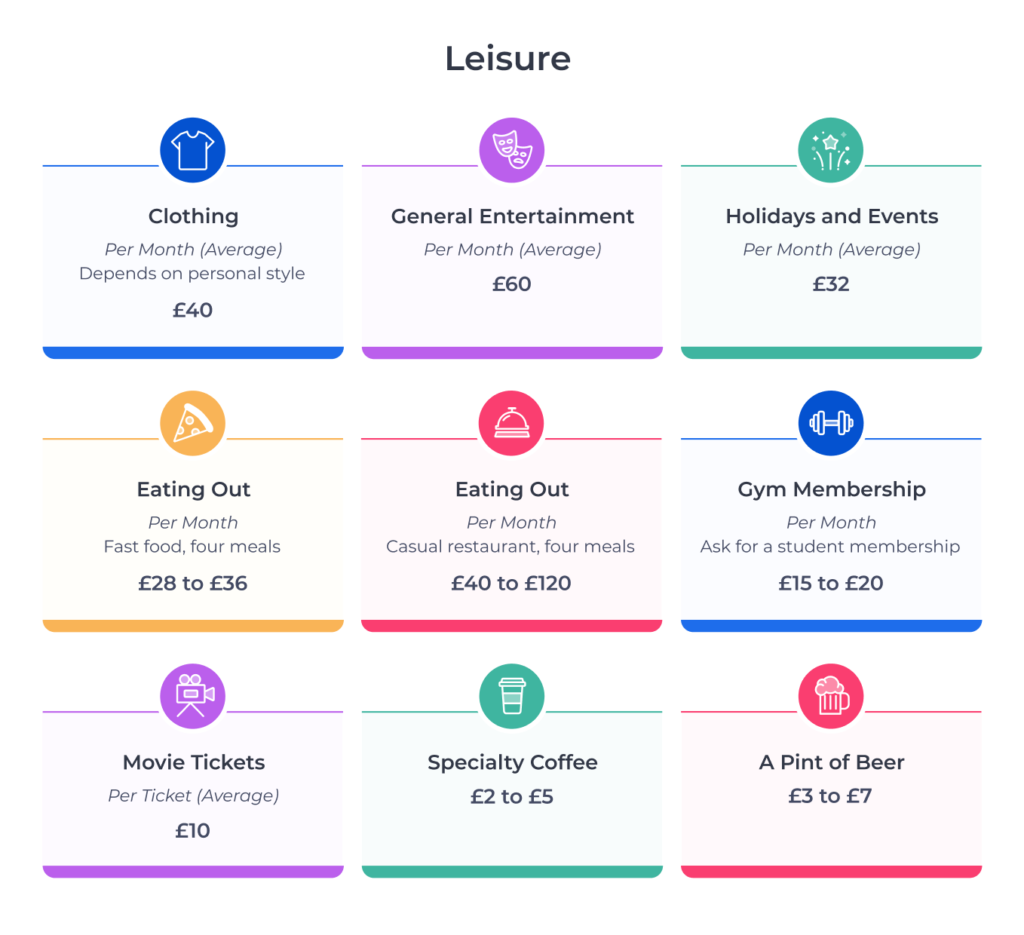
If you want to stick to a budget while studying in the UK, it’s good to understand what you spend on leisure activities. This is especially true in London, which is one of the world’s most expensive cities. Treating yourself to new experiences is part of being an international student. Just remember that balance is crucial, and student discounts can help you have fun while staying on budget.
We’ve shared the current cost of different leisure activities below, whether you love traveling, early mornings at the gym, or coffees with friends:3
Living in the UK means that many incredible destinations are only a short trip away. Here are our top five tips to travel affordably as an international student.
Transportation and Academic Supplies
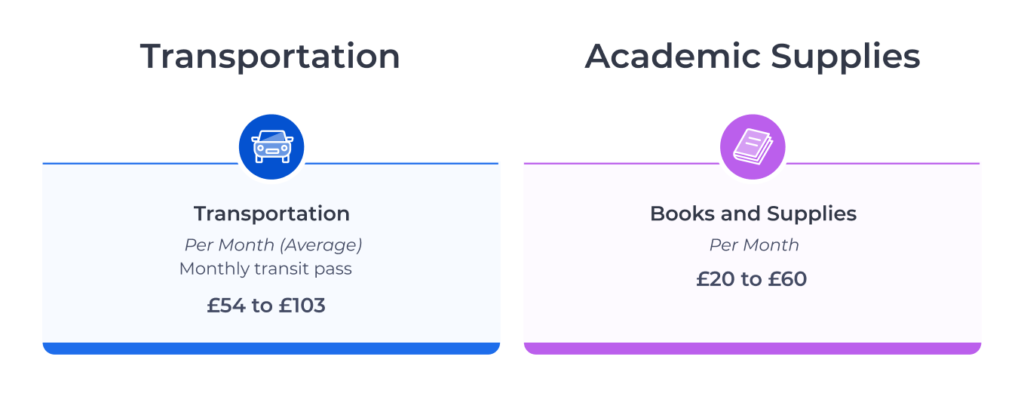
Your housing choices will also impact your monthly transportation costs. If you choose to live on-campus, you’ll save a few pounds by living close to your classes. If you live off-campus, you’ll have to travel from your home to the campus, which can cost more. However, most academic institutions offer students a discounted public transit pass. Check in with your institution to see what options are available. Below, we’ve shared some average monthly costs for course supplies and transportation:4
Travel discounts also exist at the city and national level. Here are a few to watch for:
- When traveling between cities, full-time students can buy a 16-25 Railcard or 26-30 Railcard, which helps them save up to 33% on train fares.
- Studying in London? Save on your tube (subway) rides with an 18+ Student Oyster photocard.
- If you’re under 22 years old, and studying in Scotland for more than six months, you might be able to ride for free on most of the nation’s bus services through the Young Person’s Free Bus Travel Scheme.
- Part-time and full-time students in Wales can save up to 33% on rail transit with the Student Railcard.
The estimate above for “books and supplies” is an average monthly cost and covers a variety of academic supplies, including textbooks, binders, and pens.
The cost of supplies can vary depending on your:
- Access to textbooks
- Course material requirements
- Level of study
- Field of study
Remember, some books or textbooks may be borrowed from a community or academic institution library. Or, where possible, check student social media pages or the campus bookstore for second-hand copies. Some students also choose to rent their textbooks.
Take a closer look at how international students can get health and travel insurance in the UK.

Now that you have an idea of what the cost of living in the United Kingdom is, use these estimates to start budgeting for your time abroad.
Find the academic institution and course that matches your goals: register now on the ApplyBoard platform!
FOOTNOTES:
1. Sources: British Council, “Cost of studying and living in the UK.” (on-campus housing, food) Numbeo, “Cost of Living in the UK.” (off-campus housing) University of Hertfordshire, “Cost of living.” (laundry) Worldmetrics.org, “Average Haircut Prices Around the World.” (hygiene)
2. Sources: British Council, “Cost of studying and living in the UK” (phone). Numbeo, “Cost of Living in the UK,” (Internet, utilities). Reliant Direct, “How Much Do We Spend on TV Streaming Services in the UK?” (TV)
3. Sources: All stats are from Numbeo, “Cost of Living in the UK” except entertainment (University of Hertfordshire, “Cost of living“), gym membership (British Council, “Cost of studying and living in the UK“), and clothing and events (Jessica Murray, Save the Student, “Student living costs in the UK 2025.”)
4. Sources: British Council, “Cost of studying and living in the UK” (transportation). University of Cambridge, “Undergraduate study – living costs” and Times Higher Education, “The cost of studying at a university in the UK as an international student” (books).